Roaming Pet Cats On Native Wildlife!
Currawong Park Volunteers are making a powerful impact at a local level—bringing the community together to care of a small pocket of urban
habitat. Through a recent letterbox drop and a feature on 7NEWS (aired 21 April, with spokespersons Lyn Allen, Phil Spark and Penny Milson),
the group is shining a light on an issue that often goes unnoticed: the impact of roaming pet cats on native wildlife.
Over the past five years, dedicated volunteer efforts at Currawong Park (corner of Raglan and Fitzroy Streets) have transformed the space into a thriving habitat. Thanks to the planting of native trees, shrubs and grasses, the park has seen an extraordinary ten-fold increase in native bird species. Today, more than 30 species have been recorded, including much-loved locals such as the Tawny Frogmouth, Superb Fairy-wren and Eastern Rosella. This is a remarkable achievement and a testament to what consistent, community-driven environmental care can deliver.
However, this success story is now under threat.
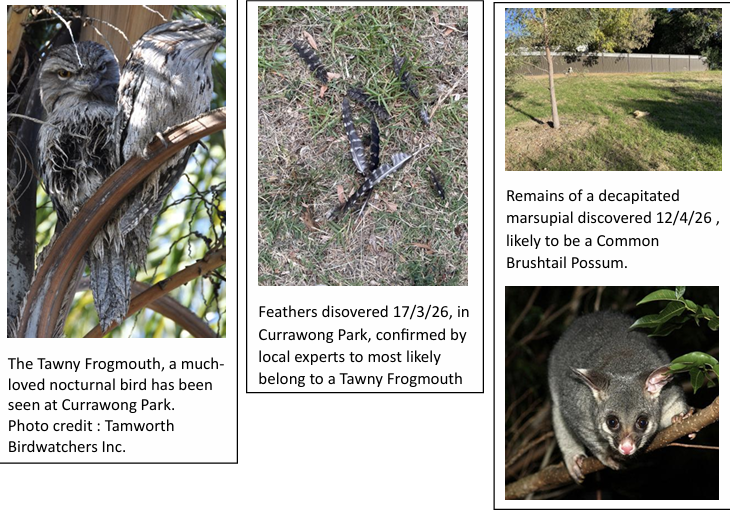
Recent observations by volunteers have revealed clear evidence of predation by roaming cats. In just the past month, remains of several native animals have been discovered in the park, including what is believed to be a Tawny Frogmouth and a Common Brushtail Possum. These findings are confronting, but they highlight an important reality: even well-fed, much-loved domestic cats are instinctive hunters.
Research shows that roaming pet cats kill an average of 110 native animals each year. This includes birds, mammals and reptiles—many of which are already under pressure from habitat loss and other environmental stresses. In a place like Currawong Park, where habitat restoration has created a safe haven, the presence of roaming cats can quickly undo years of careful work.
The Currawong Park Volunteers are approaching this issue with a strong focus on education and community engagement. Their message is simple and practical: responsible pet ownership can make a significant difference. Keeping cats contained—either indoors or in a secure outdoor run—helps protect wildlife while also keeping pets safe from traffic, disease and injury. Desexing cats and avoiding feeding stray animals are also key steps in reducing the impact on local ecosystems.
Importantly, this is not about blame—it’s about awareness and shared responsibility. Many cat owners are unaware of the scale of the impact their pets can have, particularly at night when hunting behaviour is most active. By starting conversations at the neighbourhood level, the volunteers are fostering a more informed and proactive community.
The recent 7NEWS story has helped amplify this message, bringing broader attention to both the success of the park and the challenges it faces. It’s a great example of how local action, combined with media engagement, can drive meaningful change.
Currawong Park is more than just a green space—it’s a living example of what’s possible when community, biodiversity and stewardship come together. Protecting it now ensures that future generations will continue to enjoy the rich birdlife and natural beauty that volunteers have worked so hard to restore.
-(1).jpg)