
Soil nutrients: Are you a poor rich? - Dr Aurelie Quade
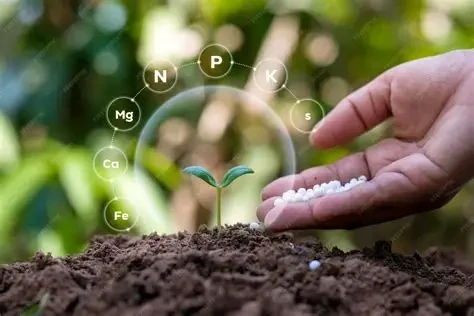
“If your inputs are no longer giving you the return you hoped for, it may not be a product problem — it could be a soil problem. Understanding where your nutrients actually sit is the first step to getting more from every dollar you spend.”
Nutrient pools: long, medium and short-term Soil nutrient status is not just about deficiencies, sufficiencies or toxicities. It comes from
three pools, each serving a productivity role over different time frames:
• Total nutrients — long-term wealth
• Exchangeable nutrients — medium-term savings
• Soluble nutrients — short-term cash in hand
Total nutrients are everything present in the soil profile — both accessible and inaccessible.
Think of this pool as your total wealth: your disposable cash plus the assets tied up in your house, car, or farm. Some nutrients are
immediately spendable, but much is locked away in minerals or organic matter that need years to mineralise. This pool shows how “wealthy”
your soil really is.
Exchangeable nutrients are your savings account. They are not on the credit card yet, but they can be easily drawn down when needed — a few clicks away on your banking app. These nutrients are loosely held on clay surfaces and can quickly top up soluble nutrients. Sandy soils are like poor households with no savings. Clay soils may hold large reserves, but sometimes they cling so tightly that the “savings” behave more like locked-up assets.
Soluble nutrients are your cash in hand — the tap-and-go money. Dissolved in soil water, they are immediately available for plant uptake. Why check your soil assets, savings and cash flow? In a healthy soil, nutrients move smoothly between pools. A sandy soil will never be as “rich” as a heavy clay, but it can still perform at its best — if you know how its finances flow. Regular soil testing shows you whether fertiliser inputs are being deposited into savings, tied up in assets, or leaking away.
Other test parameters add important context:
• pH influences nutrient availabilit
• ECEC (Effective Cation Exchange Capacity) indicates how well your soil can hold and trade nutrients.
• Base ratios (Ca:Mg:K) highlight nutrient balance.
• Buffering capacity and soil organic carbon reveal resilience
When soils degrade, two things happen: nutrients get locked away in assets you cannot liquidate, or your bank account gets “hacked” — every fertiliser deposit vanishes. In practice, that means you might apply $1 worth of nutrients and only $0.40 to $0.60 reaches your crop.
The “Poor Rich” Farmer
If your total nutrient pool is high but your exchangeable pool is consistently low, you are a poor rich. On paper you are wealthy, but in
practice you are broke. You still need to apply nutrients as if your soil had none, just to keep the soluble pool afloat. Over time this
gap worsens. Poor-rich soils also struggle with moisture retention. And yield potential still comes down to the most
How to become a “Savvy Rich”
Ultimately,what matters most is not which pool nutrients sit in, but how well your soil biology transfers them between pools. That is the
role of microbes.
Soil organic carbon is the best indicator of microbial activity. As SOC increases, so do the number and diversity of microbes capable of
moving nutrients from locked-up assets into the savings and cash pools. A 1% increase in SOC lifts your soil water holding capacity by
around 150,000 litres per hectare — about 150 ute loads. At 2%, that is 300,000 litres: the effect is exponential. Fungi are powerful
brokers.
At the tips of their hyphae, they can create micro-zones of very low pH, dissolving otherwise unavailable minerals. In financial terms,
they are the negotiators who can turn your ute sitting in the shed into instant cash — without wrecking the farm’s balance sheet.
Take-home messages
1. Soil test regularly to track where your nutrients sit.
2. Use all three pools — assets, savings and cash — for both immediate productivity and long-term resilience. 3. Build soil carbon and
microbial activity to improve nutrient cycling, water holding and soil health
.jpg)
.jpg)
.jpg)



.png)




.jpg)




-with-QR-Code.jpg)












.png)

.png)