Why Soil Microbes Run the Underground Economy - By Dr Aurelie Quade.

Do you know what the Euro, the Australian dollar, the Yen, the British pound and the Dirham have in common with soil carbon, total carbon,
organic carbon, recalcitrant carbon and labile carbon? They are all forms of currency.
“Soil microbes are not some benevolent gifts from nature. They are genius economists, not trading in dollars, but in carbon.”
The Genius of Immobility
Ever wondered how a plant survives being stuck in one spot its entire life? A lion can wander to the next valley when prey is scarce. A zebra can trot off to greener pastures. But a plant? Once rooted, it is committed to one location, one soil type and one climate.
So how does it manage? By outsourcing. Its success lies in a remarkable evolutionary trade-off: plants exchanged mobility for partnership. They built a network of microbial collaborators — bacteria and fungi — which act as personal assistants, brokers and engineers in a continuous exchange of carbon for nutrients and water.
The Carbon Economy
Nothing in this universe is free; everything is an exchange of energy. Through photosynthesis, plants convert CO into sugar — more precisely, into long chains of carbon. Humans are about 18% carbon by
2
mass. Fungi and bacteria? Roughly 50%. To multiply as fast as they do, they need a constant carbon supply.
That is the deal: microbes provide services — nutrient acquisition, water transfer and biological protection — and plants pay in sugar, secreted through their roots as exudates. It is not charity. It is an active biochemical marketplace: a stock exchange of carbon and nutrients operating 24/7 beneath our feet.
Think of the underground economy like a town. It thrives when it has:
A good road network (fungal network undisturbed)
Access to goods and services (crumbly, well-aerated soil)
Sufficient and varied food supply (soil nutrients)
A diversified economy (plant and microbe diversity)
Reviewing Your Underground Town
Every farm has its own microbial “town.” Some are booming. Some are war zones, relying on international aid for subsistence. Before applying fertiliser, ask:
What is not working in my underground community?
Which nutrients are actually missing?
Fertiliser is not the enemy — blind application is. Nutrients deliver maximum yield when the microbial and structural systems can process and deliver them to roots efficiently. Otherwise, it is like throwing money into an economy without knowing whether you are funding roads, hospitals or a black hole.
The Microbial Trade Network
Microbes act like global freight companies, retrieving nutrients and moisture from distances that would make DHL jealous. A single fungal hypha can extend several metres. In just one gram of soil, their total length can stretch tens to hundreds of metres — remote nutrient access at scale.
The trade is not random. It is regulated by chemical signalling, whereby plants make specific requests. For example, when plants need phosphorus, they signal via root-derived semiochemicals — basically posting on the soil’s version of social media: “Sugar for phosphorus. Offer valid until further notice.” Later in the season, they will specifically request nitrogen the same way.
Microbes respond by mobilising nutrients through:
Decomposition: enzymatic breakdown of organic matter
Mineralisation: conversion of organic nutrients into inorganic, plant-available ions
Solubilisation: releasing nutrients into soil solution through organic acid secretion
In diverse microbial systems, pathogen outbreaks rarely dominate — population booms simply become a food source for another microbial guild. In degraded systems, that stabilising web is missing and “thugs” can dominate.
The Moisture Multiplier
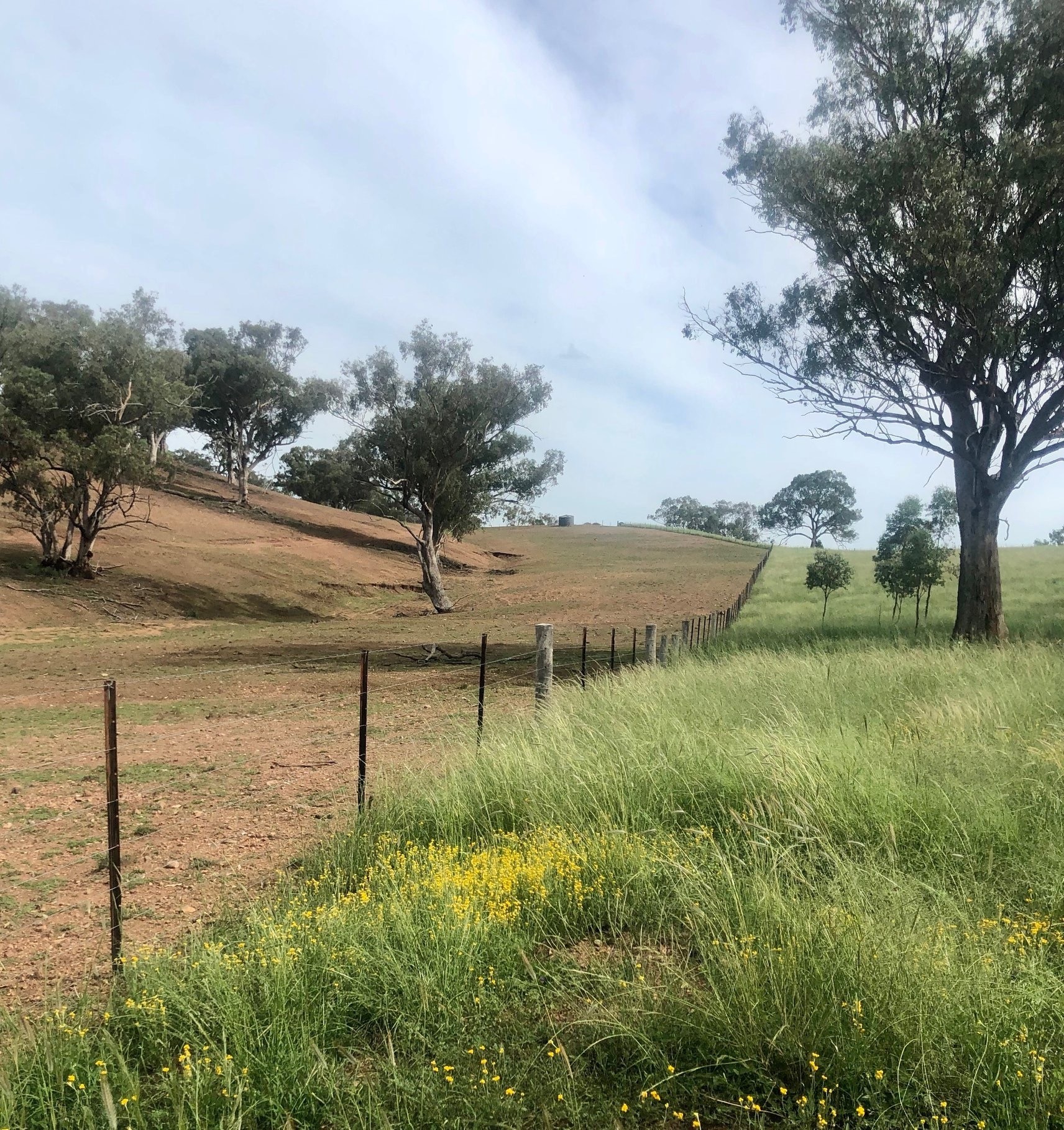
Australia’s biggest yield thief is water stress — and healthy soils, driven by microbial activity, act like sponges:
Microbial glues bind soil into stable aggregates, letting water in instead of letting it run off.
Humus, a microbial end-product, stores significant water relative to its weight.
Bacterial gels retain moisture in micro-zones.
Fungal networks explore pores inaccessible to roots, effectively enlarging the absorbing surface.
Some plant-associated microbes enhance plant drought responses.
These mechanisms do not defy drought, but they buffer it — buying time and maintaining plant function under stress.
Closing Remark
Soil microbes alone will not keep Australia green through drought or feed 9.5 billion people by 2050 — but neither will blind fertiliser application. Beneath every thriving paddock lies a living, breathing economy, one built on carbon, cooperation and microbial genius. Ignoring it while fixating on fertiliser chemistry is like trying to fix a town’s economy by printing more money without fixing the roads.
Assess what your underground town has. Determine what it needs. Invest in a strategy to rebuild the microbial economy — because regeneration takes years, not seasons.
Dr Aurelie Quade is a researcher and director focused on translating soil microbiology into actionable insights for high-performing agricultural businesses across Australia. contact@soilresilience.com.au

.png)





.png)



)-(002).png)




.png)



).png)


.png)



.png)







.png)
.jpg)
.png)
.png)